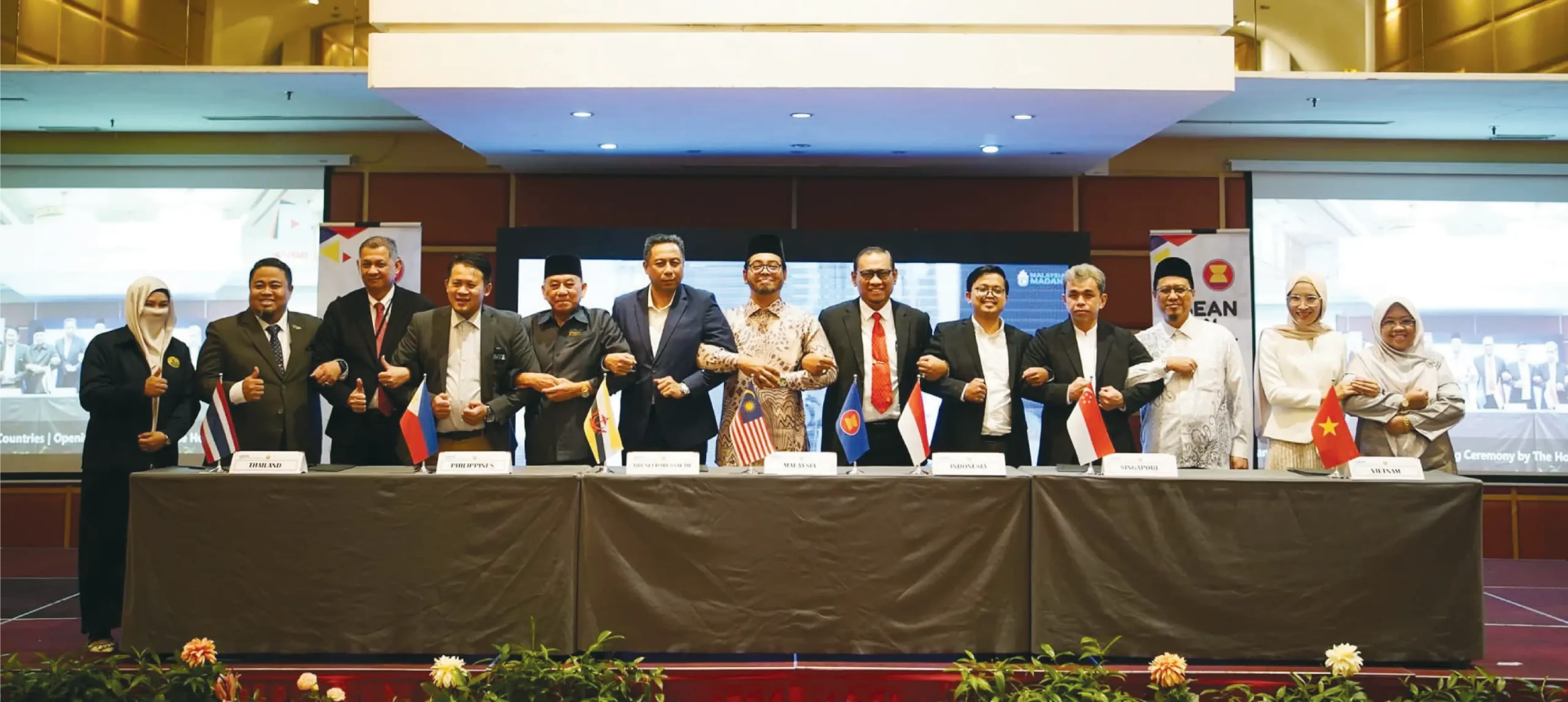
JAKIM’s expanding role in ASEAN halal development
AS THE ASEAN Chair this year, Malaysia will reinforce its leadership in the region, particularly in the global halal industry.

Since the early 2000s, the Department of Islamic Development Malaysia (JAKIM) has been a leading advocate for the harmonisation of halal standards.
“Malaysia was the first nation to establish a comprehensive halal certification standard, setting a benchmark that has influenced neighbouring countries such as Indonesia, Singapore, and Brunei,” stated JAKIM Director-General Dato’ Dr Sirajuddin Suhaimee.
At present, Malaysia is focused on addressing inconsistencies in halal certification across ASEAN, which have increased the risk of forgery and expired halal approvals. Key initiatives, as outlined by JAKIM, include:
• Collaborations with International Bodies
JAKIM promotes mutual recognition of halal certification among ASEAN member states by working with international bodies such as the Standards and Metrology Institute for Islamic Countries (SMIIC). This will streamline trade, reduce trade barriers, and mitigate the risks of fraud and certification inconsistencies, thereby instilling greater trust.
• Capacity Building for ASEAN Certification Bodies
To ensure effective implementation and enforcement of harmonised halal standards, JAKIM will provide training and technical support to halal certification bodies across ASEAN.
• Regional Consensus
JAKIM will focus on dialogue and cooperation to navigate the differing regional perspectives on halal standards, such as the definition of halal food.
• Leveraging Advanced Technologies
JAKIM is exploring the use of advanced technologies such as blockchain to enhance traceability and authenticity in the halal supply chain. A secure and transparent digital system will minimise risks of forgery while maintaining consumer trust.
REGIONAL & GLOBAL TIES
The ASEAN Halal Secretariat serves as a platform for dialogue and consensus-building, connecting Malaysia with key stakeholders across ASEAN and beyond. This includes governmental authorities, industry associations, and certification bodies.
That is to say, the ASEAN Halal Secretariat is expected to strengthen Malaysia’s domestic halal ecosystem and promote global acceptance of its halal standards.
A key strategy in this effort is continuous engagement with industry leaders through structured roundtable discussions. These discussions will ensure that new halal certification schemes align with industry needs.
Sirajuddin noted the significance of this approach, citing the development of Malaysia’s halal standard for medical devices as an example.
“We work closely with industry players when developing new procedures and certification schemes. I still remember when we first introduced Malaysia’s halal standard for medical devices; it took multiple roundtable discussions to come to a shared understanding of the importance of halal certification.”
Besides that, the ASEAN Halal Secretariat also plays a key role in forging bilateral and multilateral agreements that underpin Malaysia’s halal framework. These agreements, often formalised as Memoranda of Understanding (MoUs) or Memoranda of Cooperation (MoCs), facilitate international cooperation.
The 2023 MoC with Saudi Arabia, for instance, has helped establish mutual recognition of halal certifications for local products, facilitating smoother trade and regulatory alignment.
These international collaborations also contribute to the broader goal of ensuring halal compliance in the supply chain, particularly in agriculture and halal-certified abattoirs.
“We work closely with the Australian Government through platforms like the Animal and Animal Products Technical Working Group (AAPTWG) and Halal Task Force Meeting to address these key areas,” said Sirajuddin.
Multiple Malaysian government agencies, including the Malaysia Halal Council Secretariat, are actively involved in this coordination. The Malaysia Halal Council Secretariat also collaborates with the Department of Veterinary Services (DVS) to evaluate and approve foreign abattoirs, ensuring they meet Malaysian halal requirements.
In its ongoing efforts to ensure a seamless global halal supply chain, JAKIM has granted recognition to 88 foreign halal certification bodies in 49 countries.
With this recognition, consumers can be confident in the halal integrity of imported foreign-certified products.
“To maintain this integrity, we conduct comprehensive site inspections to verify that all ingredients and raw materials meet halal standards at every stage of production.”
JAKIM, therefore, relies on reputable and credible foreign halal certification bodies to act as its representatives, ensuring continuous oversight.